The Appointment Clock Is Ticking: What Gets Lost When Your Doctor Has Only Minutes to Listen
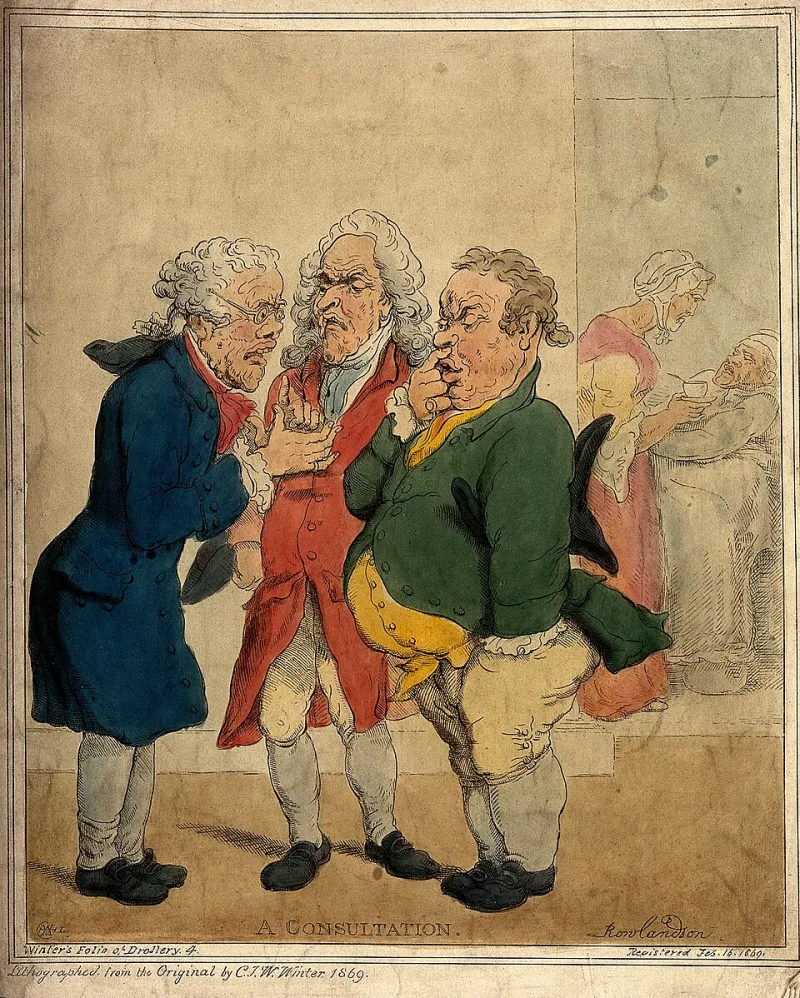
Photo: Unknown, CC BY 4.0, via Wikimedia Commons
There is a particular kind of frustration that many patients carry quietly out of a doctor's office: the sense that something important was left unsaid. The appointment ended before the real conversation could begin. A symptom mentioned in passing received a brief nod but no follow-up. A concern that had been building for months was addressed in thirty seconds.
This experience is not a personal failure, nor is it necessarily a reflection of your physician's dedication. It is, in many cases, the predictable result of a healthcare system in which the average primary care appointment in the United States lasts between fifteen and eighteen minutes—and in busier practices, considerably less.
At Chestnut Ridge Center, we believe that genuine care cannot be rushed. Understanding why time constraints in clinical settings have become so pervasive, and what patients can do to protect themselves within that reality, is an essential part of advocating for your own health.
Why Appointments Have Grown Shorter Over Time
The compression of appointment time is not accidental. It reflects a confluence of systemic pressures that have intensified over the past two decades. Reimbursement structures in the United States have historically rewarded volume over depth—meaning that a practice seeing more patients per day may generate more revenue than one that schedules longer, more thorough consultations.
Administrative burdens have also expanded substantially. Physicians today spend a significant portion of their working hours on electronic health record documentation, prior authorization requests, and compliance requirements. Studies have found that for every hour a primary care physician spends with patients, nearly two additional hours are spent on administrative tasks. That time has to come from somewhere.
The result is a clinical environment where even a conscientious, highly skilled provider may have only a narrow window to assess your presenting concerns, review your history, order appropriate tests, and formulate a care plan. When that window is too narrow, things fall through.
What a Short Appointment Can Miss
The consequences of compressed visits are not always immediately obvious, which makes them particularly dangerous. A provider who sees you for ten minutes may address the single complaint you lead with—say, a sore throat or a request for a prescription refill—without ever learning about the persistent fatigue you have been experiencing for three months, the family history of cardiovascular disease you meant to mention, or the gradual weight changes that have been troubling you.
Health histories are rarely linear. A full picture of someone's wellbeing often emerges through conversation, through context, and through the kind of attentive listening that simply cannot be compressed into a few rushed exchanges. Conditions such as depression, thyroid dysfunction, autoimmune disorders, and early-stage cardiovascular disease are frequently identified not through a single dramatic symptom but through a pattern of smaller signals that only become meaningful when someone takes the time to connect them.
Fragmented care—where different providers see different pieces of a patient's health without a unified understanding of the whole—is another significant risk. When appointments are too brief for thorough communication, critical information may not transfer between visits or between members of a care team.
Preparing Before You Walk Through the Door
While patients cannot single-handedly restructure a healthcare system, they can take deliberate steps to make their time within it more productive. Preparation is among the most powerful tools available.
Before any appointment, consider writing down your concerns in order of priority. It is easy, under the mild pressure of an examination room, to lose track of what you intended to say. A brief written list—three to five items at most—keeps the conversation anchored to what matters most to you.
Be specific when describing symptoms. Rather than saying you have been feeling unwell, note when the symptom began, how frequently it occurs, what makes it better or worse, and whether it affects your daily functioning. Precision helps your provider assess the issue more efficiently and accurately.
If you have multiple concerns that genuinely require discussion, consider requesting a longer appointment when you schedule. Many practices offer extended visit options for complex or comprehensive reviews. This is not an unusual request; it is a reasonable one.
Speaking Up During the Visit
It is entirely appropriate to advocate for yourself during an appointment. If a provider appears ready to conclude the visit and you have not yet raised an important concern, it is reasonable to say so directly and calmly. Phrases such as, "Before we finish, I want to make sure we discuss one more thing," signal that the conversation is not yet complete.
If you feel your concern has been addressed too briefly, you can ask for clarification: "Can you help me understand what we should watch for, and when I should follow up if this continues?" This invites your provider to give the matter more complete attention without requiring confrontation.
Bring a trusted person with you when possible, particularly for appointments involving complex health concerns, new diagnoses, or significant treatment decisions. A second set of ears helps ensure that important information is retained and that nothing is inadvertently overlooked.
Continuity of Care and Why It Matters
One of the most effective safeguards against the risks of rushed appointments is establishing consistent, ongoing care with a provider who knows you over time. A physician or nurse practitioner who has seen you across multiple visits, who has reviewed your records, and who understands your personal health context can often identify concerns more quickly and accurately than a provider encountering you for the first time.
At Chestnut Ridge Center, continuity of care is a cornerstone of how we approach patient relationships. A provider who knows your baseline—your typical blood pressure, your sleep patterns, your history of anxiety or chronic pain—is better positioned to recognize when something has shifted. That accumulated knowledge is not a luxury; it is a clinical asset.
If you do not currently have an established primary care relationship, building one is among the most valuable health investments you can make. Preventive care and early intervention are far more effective when delivered by someone who understands the full context of your health.
The Broader Conversation Worth Having
The constraints facing healthcare providers are real, and they deserve acknowledgment. Most physicians enter medicine with a genuine commitment to thorough, compassionate care. Many are as frustrated by time limitations as their patients are. Systemic reform—including changes to reimbursement models, administrative burden reduction, and expanded support for primary care—is a policy conversation that affects every person who seeks medical attention in this country.
In the meantime, patients who understand the landscape are better equipped to navigate it. Knowing that your appointment time may be limited is not a reason for resignation. It is a reason to come prepared, to communicate clearly, and to seek out care environments that genuinely prioritize your whole health story.
Your health history is not a checklist. It is a narrative—one that deserves to be told completely, and heard fully. At Chestnut Ridge Center, we are committed to creating the space for that conversation.